The complete OCR A Level Biology textbook for Year 12 and Year 13 in one place ⚡
Year 12 & 13 Textbook includes all the topics across Modules 2 to 6 – specification-aligned and ready to use from day one.
What’s included
Inside the textbook
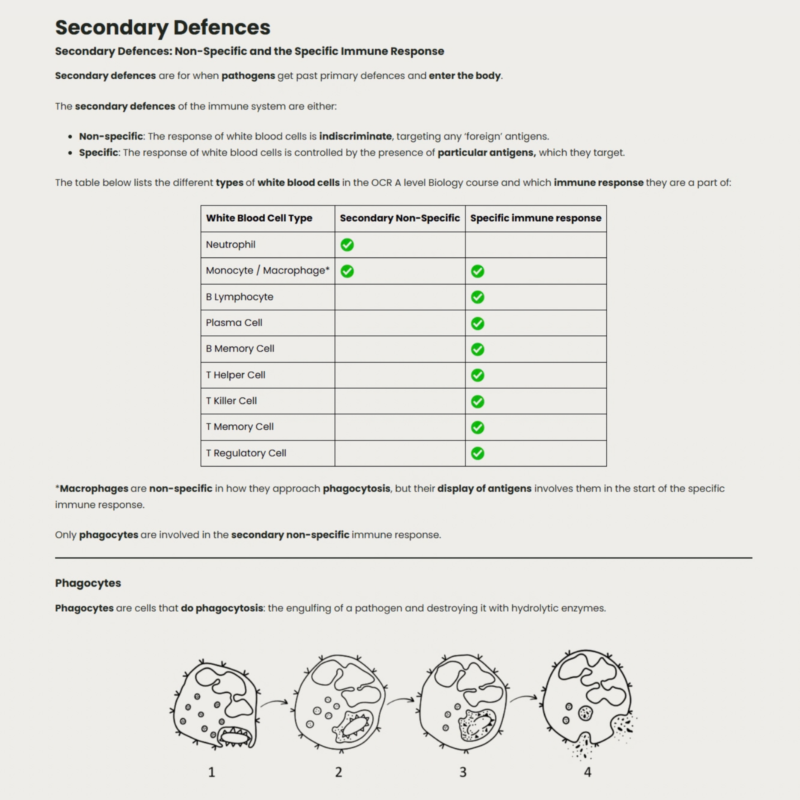
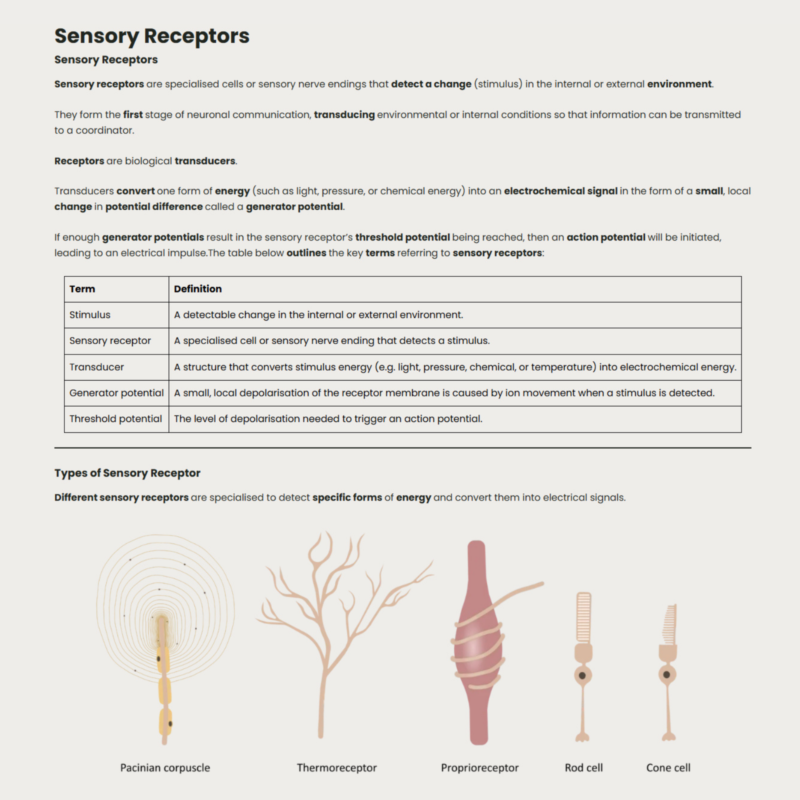
Both years of the textbook – comprehensive coverage from biological molecules and enzymes to exchange, transport and disease in Year 12, through to nerves, hormones, respiration, genetics and ecosystems in Year 13. Clear explanations, summary tables and visuals with spec reminders throughout.
Why choose Year 12 & 13 Textbook?
- Both years of the textbook in one purchase
- Specification-aligned and updated when the spec changes
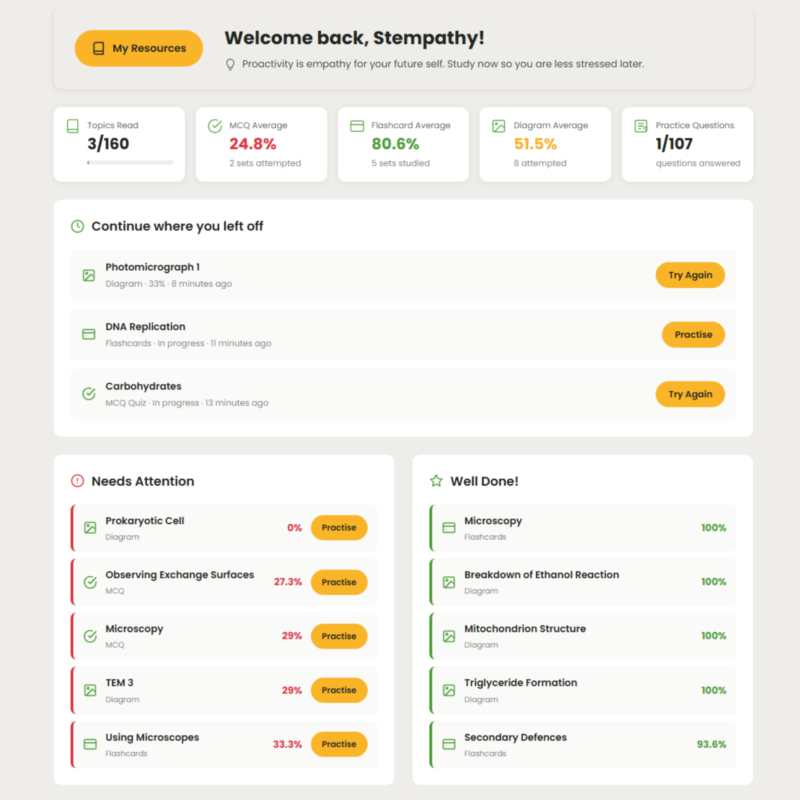
- Learn at your own pace, one topic at a time
- Useful tips to help you avoid common mistakes
- One-off payment, no subscription
Format
Web-based resources. Mobile/desktop friendly. Full access for 2 years, updates included.
Topics covered
Module 2: Foundations in Biology (34 topics)
- Microscopy
- Using Microscopes
- Microscopy Calculations
- Preparing Microscope Slides
- Eukaryotic Cell Structure
- Prokaryotic Cell Structure
- Interpreting Micrographs
- Comparing Eukaryotic and Prokaryotic Cells
- Organelle Involvement in Protein Synthesis
- Water
- Introduction to Macromolecules
- Carbohydrates
- Lipids
- Proteins
- Inorganic Ions
- Chemical Tests for Biomolecules
- Colorimetry
- Chromatography
- Nucleotides and Nucleic Acids
- DNA Replication
- Genetic Code
- Protein Synthesis
- Enzymes
- Cofactors and Inhibitors
- Factors Affecting Enzyme Activity
- Biological Membranes
- Transport Across Membranes
- Water Potential and Osmosis
- Eukaryotic Cell Cycle
- Mitosis and Cytokinesis
- Meiosis
- Stem Cells
- Organisation in Animals
- Organisation in Plants
Module 3: Exchange and Transport (22 topics)
- Exchange Surfaces
- Observing Exchange Surfaces
- Mammalian Gaseous Exchange System
- Mammalian Ventilation
- Oxygen Uptake in Mammals
- Measuring Oxygen Uptake in Mammals
- Ventilation and Gas Exchange in Gills
- Ventilation and Gas Exchange in Insects
- Comparing Gas Exchange Systems
- Transport Systems in Animals
- Blood Vessels
- The Heart
- Coordination of the Cardiac Cycle
- Erythrocytes and Oxygen Transport
- Carbon Dioxide
- Tissue Fluid Formation
- The Need for Transport Systems in Plants
- Plant Vascular Systems
- Interpreting Photomicrographs of Plant Tissue
- Plant Transport of Water
- Plant Adaptations to Water
- Translocation
Module 4: Biodiversity, Evolution and Disease (29 topics)
- Communicable Diseases
- Plant Defences Against Pathogens
- Non-Specific Defences in Animals
- Introduction to White Blood Cells
- Secondary Defences
- B and T Lymphocytes
- The Primary and Secondary Immune Response
- Immunity
- Antibodies
- Autoimmune Diseases
- Vaccination and Epidemics
- Developing New Medicines
- Antibiotics and Their Use
- Biodiversity
- Human Impact on Biodiversity
- Conserving Biodiversity
- Conservation Agreements
- Measuring Biodiversity
- Calculating Biodiversity
- Measuring Genetic Biodiversity
- Variation
- Causes of Variation
- Adaptations
- Natural Selection
- Evolution and Speciation
- Evidence for Natural Selection
- Charles Darwin and Alfred Russel Wallace
- Classification
- Phylogenetics
Module 5: Communication, Homeostasis and Energy (75 topics)
- The Need for Communication Systems
- Introduction to Communication Systems
- Homeostasis and Feedback Systems
- Thermoregulation: Ectothermy and Endothermy
- The Importance of Excretion
- Functions of the Liver
- Liver Anatomy and Histology
- Interpreting Photomicrographs of the Liver
- Kidney Anatomy and Histology
- Kidney Nephrons: Filtering the Blood
- Osmoregulation: The Collecting Duct and ADH
- Interpreting Photomicrographs of the Kidney
- Kidney Failure
- Urine Analysis
- Introduction to the Nervous System
- Principles of Neuronal Communication
- Sensory Receptors
- Neurones
- Nerve Impulses
- Myelinated and Unmyelinated Neurones
- Introduction to Synapses
- Synaptic Action
- Introduction to the Endocrine System
- Principles of Hormonal Communication
- Hormones: Types and Mechanisms
- Adrenal Glands
- Pancreas Anatomy and Histology
- Control of Blood Glucose
- Diabetes Mellitus
- Treating Diabetes
- Introduction to Plant Responses
- Types of Plant Responses
- Plant Responses to Herbivory
- Principles of Plant Coordination
- The Roles of Plant Hormones
- Hormonal Control of Shoot and Root Elongation
- Hormonal Control of Stem Elongation
- Hormonal Control of Seed Germination
- Hormonal Control of Apical Dominance
- Hormonal Control of Leaf Loss
- Hormonal Control of Stress Responses
- Commercial Uses of Plant Hormones
- Communication Systems in Animals
- The Mammalian Nervous System
- The Central Nervous System
- The Peripheral Nervous System
- Reflexes
- Controlling Heart Rate
- The Fight or Flight Response
- Mammalian Muscle Structure
- Neuronal Control of Striated Muscle
- Myofibrils and the Sliding Filament Theory
- How Muscles Contract
- Importance of ATP in Muscle Contraction
- Photosynthesis and Chloroplasts
- Photosystems and the Electron Transport Chain
- The Light-Dependent Reactions
- The Light-Independent Reactions
- Uses of Triose Phosphate
- Photosynthetic Pigments in Plants
- Factors Affecting the Rate of Photosynthesis
- Thin-Layer Chromatography of Plant Pigments
- Introduction to Respiration
- Mitochondria Structures and Functions
- Glycolysis
- The Link Reaction
- The Krebs Cycle
- The Importance of Coenzymes in Cellular Respiration
- Oxidative Phosphorylation and Chemiosmosis
- Anaerobic Respiration
- Respiratory Substrates
- Respiratory Quotient
- The Interrelationship between Photosynthesis and Respiration
- Factors Affecting the Rate of Respiration
- Investigating the Rate of Respiration
Module 6: Genetics, Evolution and Ecosystems (66 topics)
- Cellular Control
- The Lac Operon
- Controlling the Cell Cycle
- Control of Body Plans
- Gene Mutations
- Introduction to Phenotypic Variation
- Generating Genetic Variation
- Interactions between Genes and the Environment
- Continuous and Discontinuous Variation
- Introduction to Genetic Inheritance
- Principles of Mendelian Inheritance
- Genetic Diagrams and Punnett Squares
- Monohybrid and Dihybrid Crosses
- Multiple Alleles
- Codominance
- Autosomal Linkage
- Sex Linkage
- Epistasis
- Modified Phenotypic Ratios
- Chi-squared Test
- Evolution and Natural Selection
- Speciation
- Geographical and Reproductive Isolation
- Hardy-Weinberg
- Artificial Selection
- Disadvantages of Artificial Selection
- DNA Sequencing
- The Polymerase Chain Reaction
- Electrophoresis
- DNA Profiling
- Uses of DNA Profiling
- Bioinformatics and Computational Biology
- Genetic Modification
- Gene Therapy
- Ethical Issues in Genetic Manipulation
- Introduction to Clones
- Natural Cloning in Plants
- Artificial Cloning of Plants
- Natural and Artificial Cloning in Animals
- Introduction to Biotechnology
- Culturing Microorganisms
- Standard Growth Curve
- Calculating Microorganism Population Growth
- Batch and Continuous Fermentation
- Factors Affecting the Growth of Microorganisms
- Introduction to Immobilised Enzymes
- Immobilising Enzymes
- Ecosystems
- Biomass Transfers
- Food Chains and Food Webs
- Manipulating Biomass Transfers
- Recycling in Ecosystems
- The Carbon Cycle
- The Nitrogen Cycle
- Succession
- Introduction to Sampling Methods
- Measuring Abundance
- Measuring Distribution
- Populations and Limiting Factors
- Population Growth and Carrying Capacity
- Interactions between Populations
- Predator-Prey Relationships
- Conservation and Preservation
- Managing Ecosystems and Resources
- Sustainable Management of Ecosystems for Timber
- Sustainable Management of Ecosystems for Fish