Free The Mammalian Nervous System revision notes for OCR A Level Biology – covering specification points 5.1.5 (g), 5.1.5 (h) and 5.1.5 (i).
Animals must detect changes in their internal and external environments and coordinate appropriate responses.
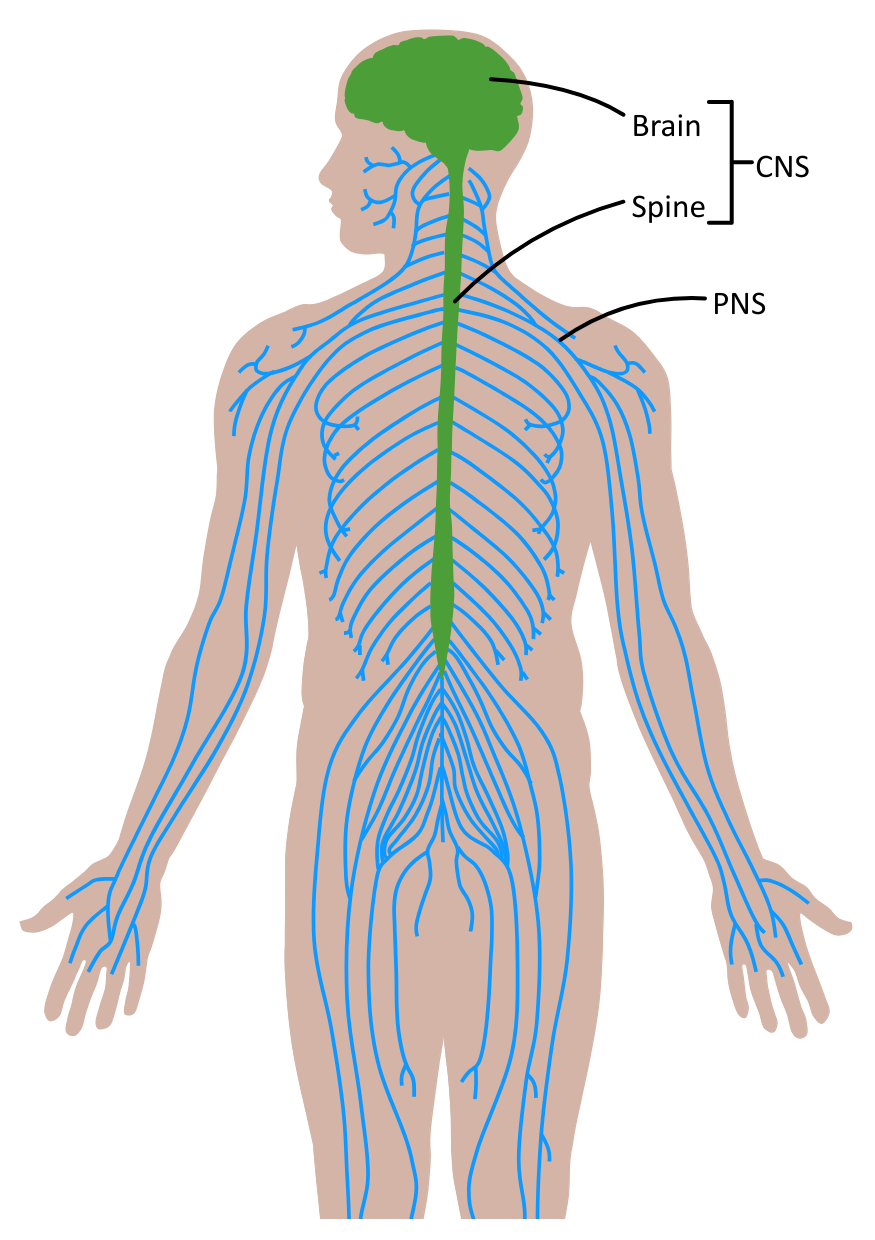
The mammalian nervous system is organised into a central nervous system (the brain and spinal cord) and a peripheral nervous system.
The diagram below shows the location of the CNS and PNS:
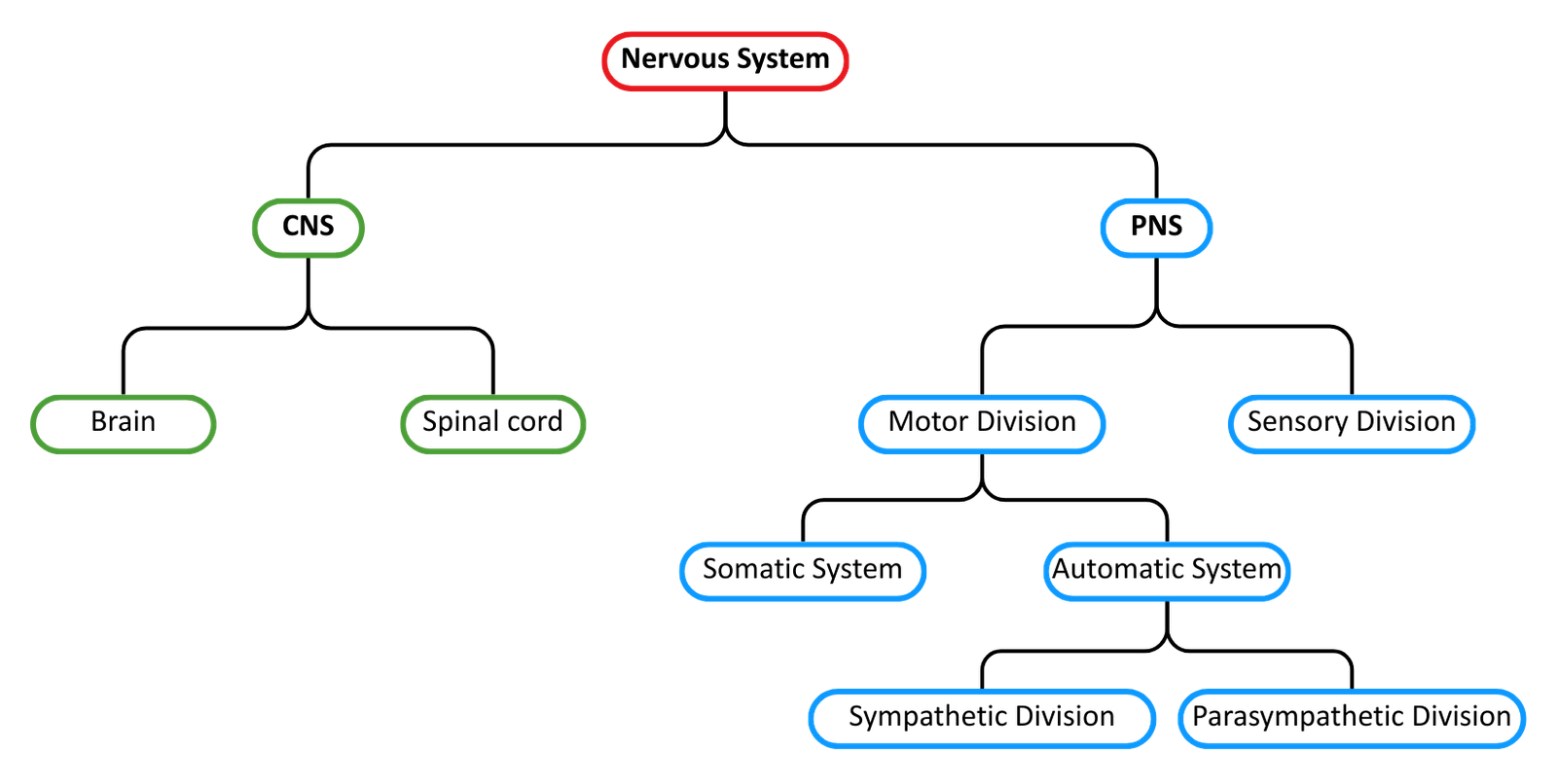
The CNS and PNS are organised into divisions, each with specific roles.
The diagram below outlines the main divisions of the nervous system:
The Brain
The brain is the primary coordination centre of the mammalian nervous system, receiving sensory information from the body, processing it, and sending coordinated instructions to effectors.
The diagram below shows a cross-section of the human brain, and the regions and structures within:
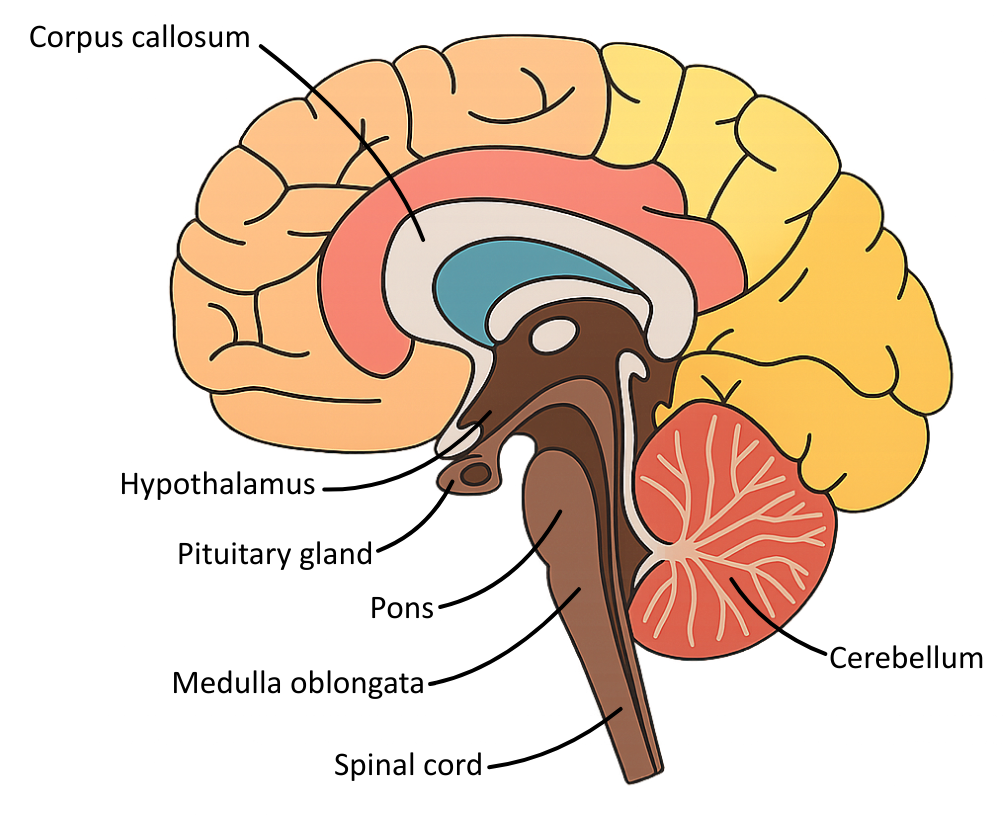
The table below outlines the location and some of the functions of some of the major regions of the brain:
| Region | Functions |
|---|---|
| Cerebrum |
|
| Cerebellum |
|
| Hypothalamus | Coordinates homeostatic processes |
| Pituitary gland |
|
| Medulla oblongata | Coordinates the autonomic control of cardiac muscle, involuntary smooth muscle and glands. |
Reflex Actions
Reflex actions are rapid, involuntary and automatic responses to changes in the internal or external environment.
Reflexes often occur to prevent harm to the organism.
Reflex actions are rapid because they do not involve any processing by the brain’s higher centres before the movement occurs.
A typical reflex arc consists of:
Receptor → Sensory neurone → Relay neurone* → Motor Neurone → Effector
*The relay neurones will be located in the CNS.
Some spinal reflexes, such as the knee-jerk reflex, are unusual in that their reflex arc consists of only a motor neurone and a sensory neuron. The lack of a relay neurone means that the brain cannot consciously inhibit the response.