Free Neurones revision notes for OCR A Level Biology – covering specification point 5.1.3 (c).
Neurones
Neurones are specialised cells that transmit information rapidly throughout the nervous system.
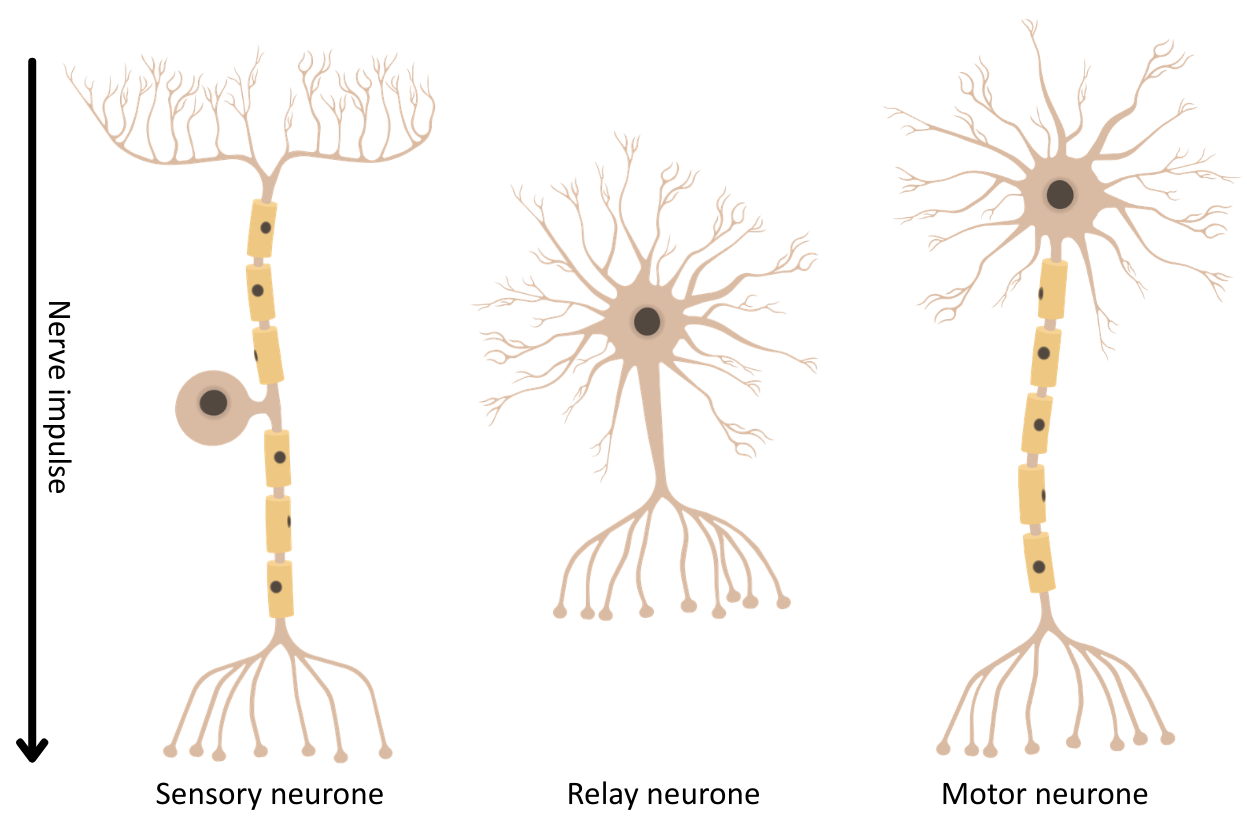
All neurones share the same basic structure but are specialised into different types for different roles; at A level we examine generic sensory, relay and motor neurones.
It is also important to note that most neurones are separated from each other by a microscopic intercellular gap known as the synaptic cleft*. Synapses are junctions that chemically transmit signals with neurotransmitters, which then trigger electrical changes in the postsynaptic cell.
*Also known as the synaptic gap.
Common structural features
The table below outlines some ofthe key structures found in a typical neurone and their functions:
| Structure | Description and Function |
|---|---|
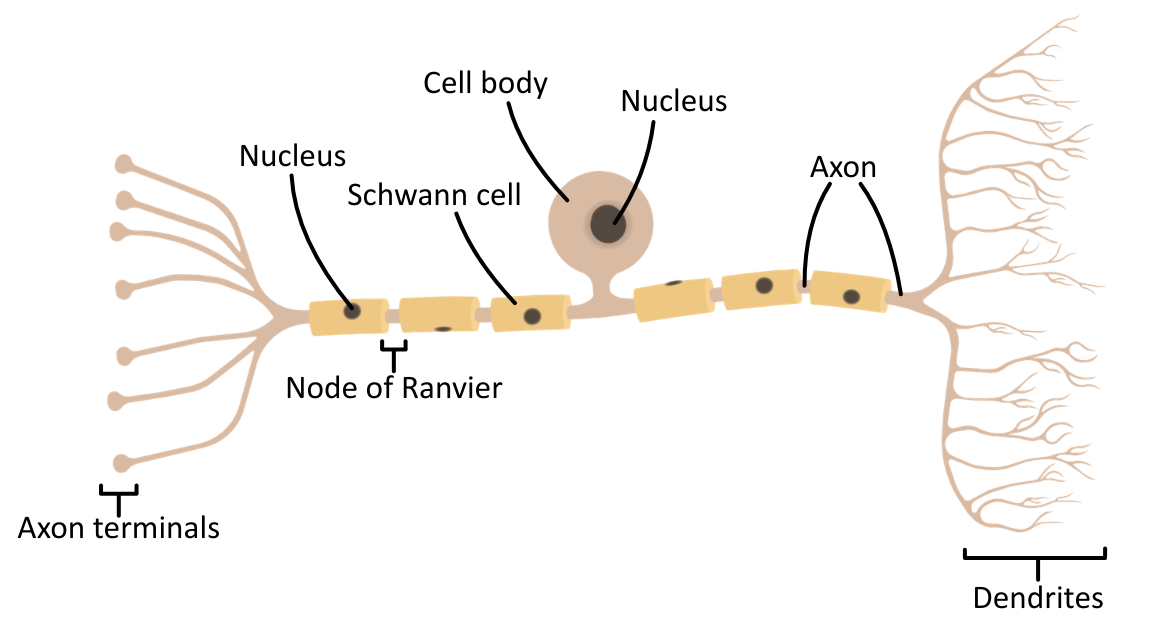
| Axon | A long extension of the membrane that carries electrical impulses away from the cell body towards other neurones or effectors. |
| Axon terminals (synaptic end) | Swellings at the end of the axon that form synapses with other neurones or effector cells, releasing neurotransmitters. |
| Dendrites | Thin, branched extensions from the cell body that receive impulses from other neurones or from sensory receptors. |
| Myelin sheath | A fatty insulating layer, typically made of Schwann-cell membranes wrapped around the axon. Increases the speed of impulse transmission and prevents signal loss. |
| Nodes of Ranvier | Gaps between Schwann cells, where the axon membrane is exposed, allow for action potentials to be propagated quickly in saltatory conduction. |
Types of Neurone
The three main types of neurone are sensory neurones, relay neurones and motor neurones:
- Sensory neurones carry impulses from sensory receptors to the CNS.
- Relay neurones carry impulses within the CNS, linking sensory neurones to motor neurones, and processing information and coordinating responses.
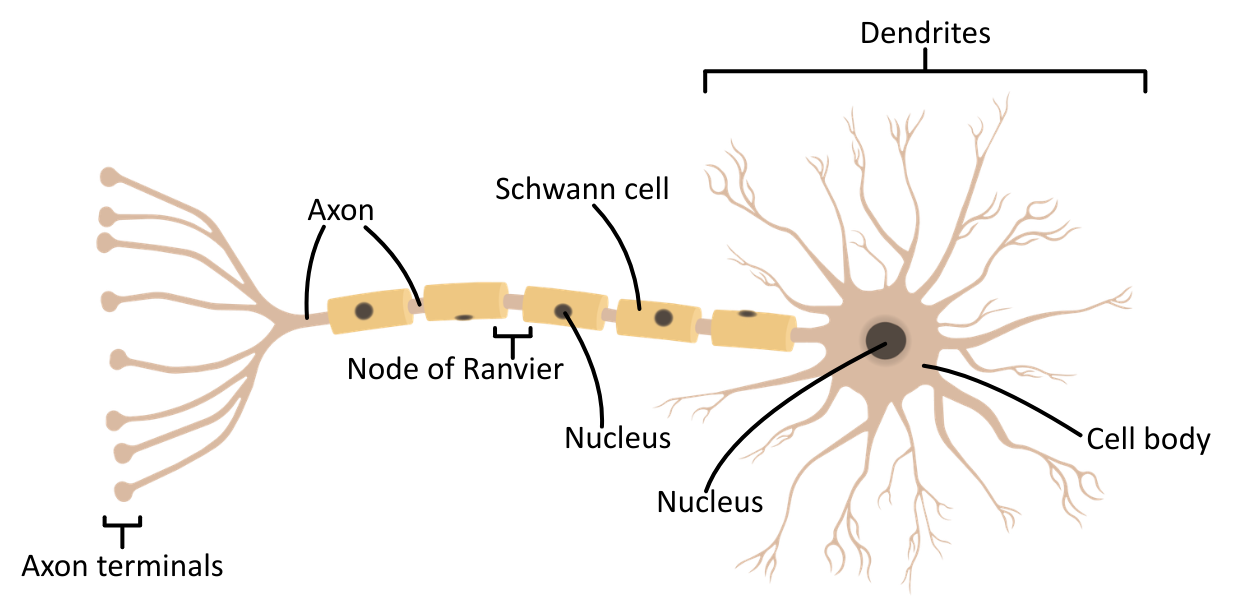
- Motor neurones carry impulses from the CNS to effectors to produce a response.
Sensory and motor neurones primarily make up the peripheral nervous system (PNS), whilst relay neurones make up the central nervous system (CNS).
Each type of neurone is specialised for its specific role, which is reflected in its cellular structure.
Sensory Neurones
Relay Neurones
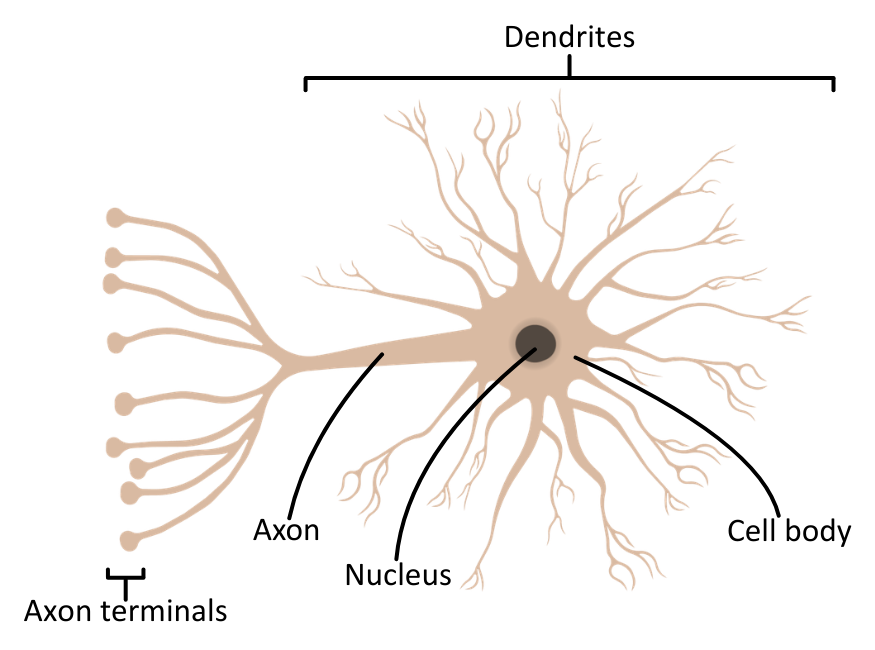
It is useful to know that relay neurones are also known as interneurones.
Motor Neurones
Myelination
It is important to note that neurones can be either myelinated or unmyelinated, which will affect the speed of the electrical impulses they carry.
Between adjacent Schwann cells are small gaps exposing the axon plasma membrane called nodes of Ranvier.
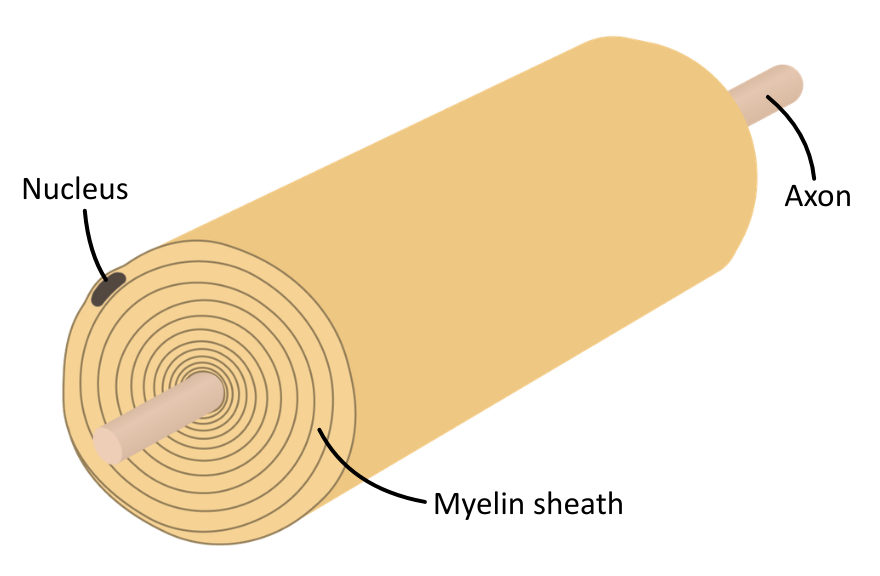
Because the myelin sheath prevents ions from moving across the axon membrane where it is covered, depolarisation and repolarisation can only occur at the nodes of Ranvier.
The table below compares the structural and functional features of myelinated and unmyelinated neurones:
| Features | Myelinated Neurone | Unmyelinated Neurone |
|---|---|---|
| Schwann-cells | Single axon tightly wrapped by many layers of Schwann-cell membrane (myelin). | Sometimes present. If present, one Schwann cell may surround more than one axon. |
| Nodes of Ranvier | Present at regular intervals. | Absent. |
| Site of ion movement | Only at nodes of Ranvier. | Along the entire axon plasma membrane. |
| Conduction. | Saltatory conduction, electrical impulse ‘jumps’. | Continuous conduction, depolarisation travels as a wave along the membrane. |