Free Liver Anatomy and Histology revision notes for OCR A Level Biology – covering specification point 5.1.2 (bii).
Gross Anatomical Structure of the Liver
The diagram below shows the position of the liver:
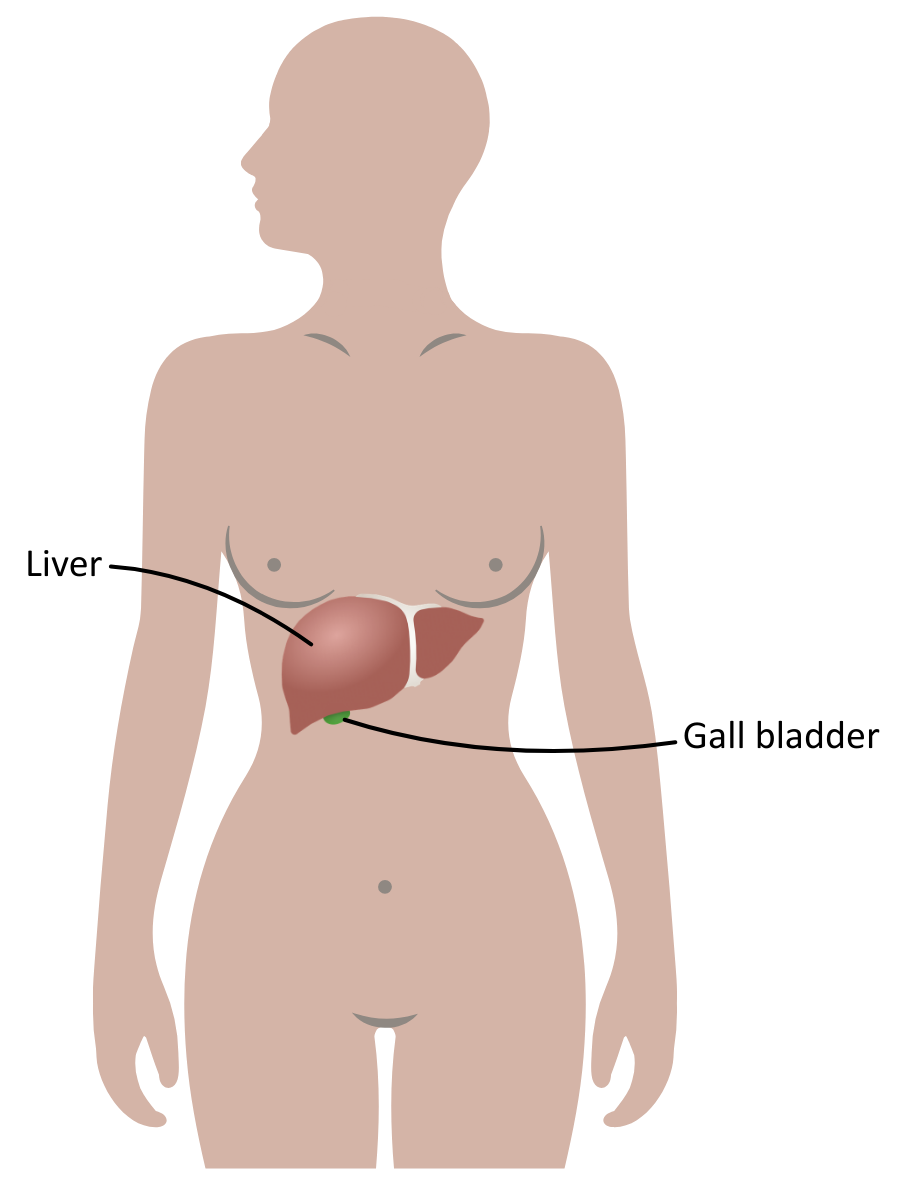
Anatomically, the liver has a large right lobe and a smaller left lobe (and two smaller subdivisions on the underside of the larger one), both of which are connected to the gall bladder and the small intestine via the bile duct, and have an extensive blood supply.
The gall bladder is located beneath the right lobe and is connected to the liver by the bile duct, which carries bile to the small intestine.
Histology of the Liver
The liver is divided into functional units called lobules.
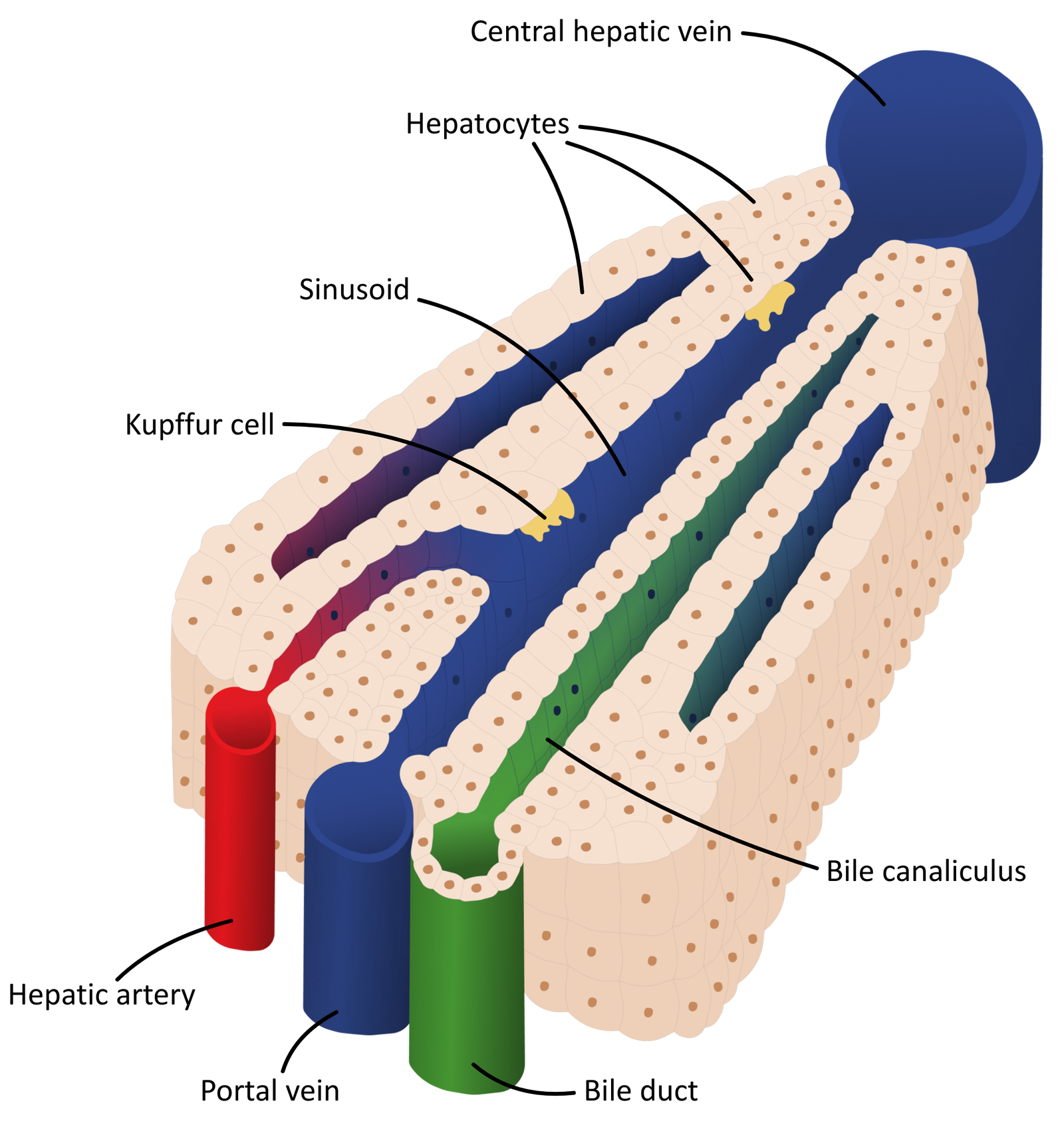
Lobules are a (roughly) cylindrical mass of hepatocytes (liver cells) arranged around a central hepatic vein, with blood vessels and bile ducts clustered around the outer edges.
The diagram below shows the idealised structure of a section from a lobule:
Detoxification: Liver processing of blood
Hepatocytes continuously alter the composition of the blood by removing, breaking down, and adding substances to it as it passes through the liver lobule.
Step-By-Step: Liver processing of blood
- Oxygenated blood from the hepatic artery and nutrient-rich blood from the hepatic portal vein enter the liver and flow into the sinusoids.
- Substances move in and out of the hepatocytes and are metabolised, stored and/or released.
- The blood flows towards the central hepatic vein in the middle of each lobule.
- The central hepatic veins carry the processed blood to the vena cava for transport around the body.
Moving among the hepatic cells of the sinusoids are Kupffer cells.
Kupffer cells are specialised macrophages that break down and recycle the components of haemoglobin from red blood cells (such as bilirubin), which may be excreted as a component of bile.
The Gall Bladder
The gall bladder is a small, muscular sac located beneath the right lobe of the liver.
It acts as a storage organ for bile, and plays an important role in lipid digestion by emulsifying fats, increasing their surface area for enzyme action.