Free Factors Affecting the Rate of Photosynthesis revision notes for OCR A Level Biology – covering specification points 5.2.1 (gi) and 5.2.1 (gii).
The rate of photosynthesis is affected by many environmental factors, which can limit the light-dependent reactions and the Calvin cycle.
Some of the main factors that affect the rate of photosynthesis are:
- Light intensity: Determines the rate of ATP and reduced NADP production in the light-dependent reactions.
- Carbon dioxide concentration: Required for carbon fixation by RuBisCO in the Calvin cycle.
- Temperature: Affects enzyme activity in the Calvin cycle.
Water stress indirectly reduces the rate of photosynthesis by closing stomata and limiting CO2 uptake.
Light Intensity
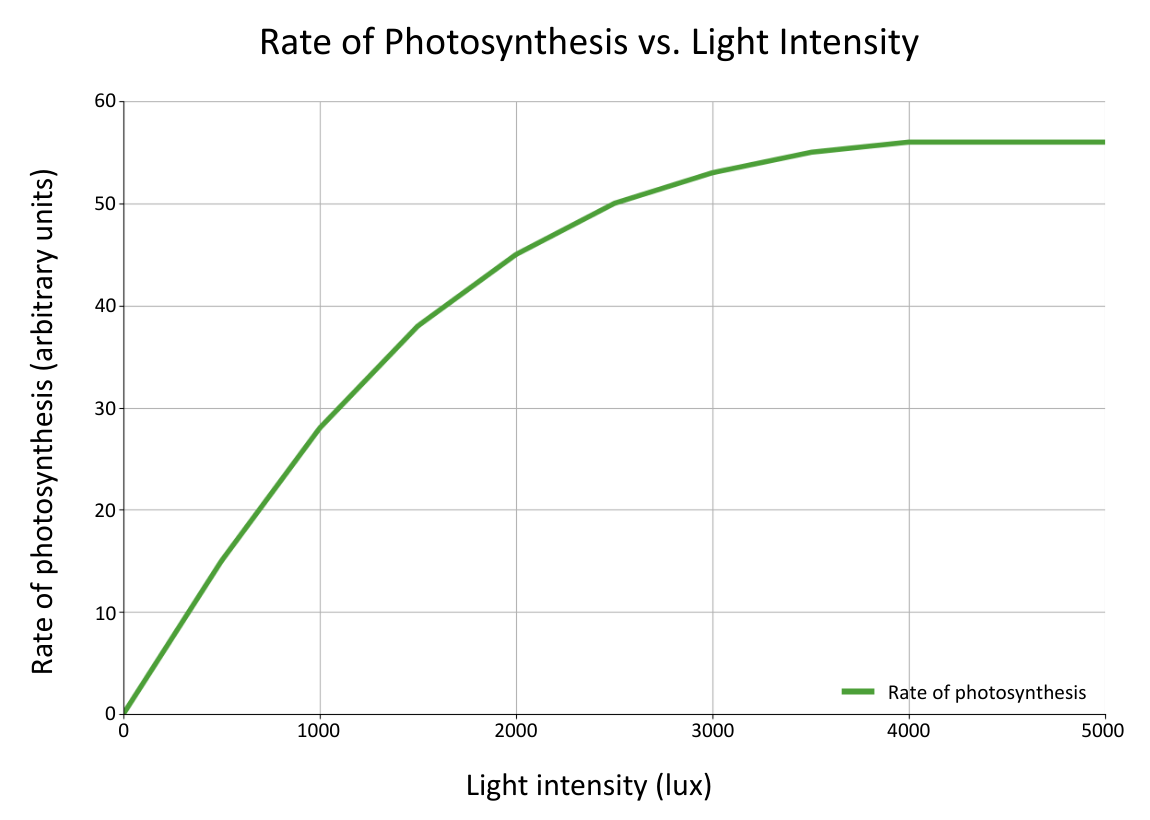
Light provides the energy for the light-dependent reactions, and at low light intensities, ATP and reduced NADP production will decrease.
The graph below shows how light intensity affects the rate of photosynthesis:
Carbon Dioxide Concentration
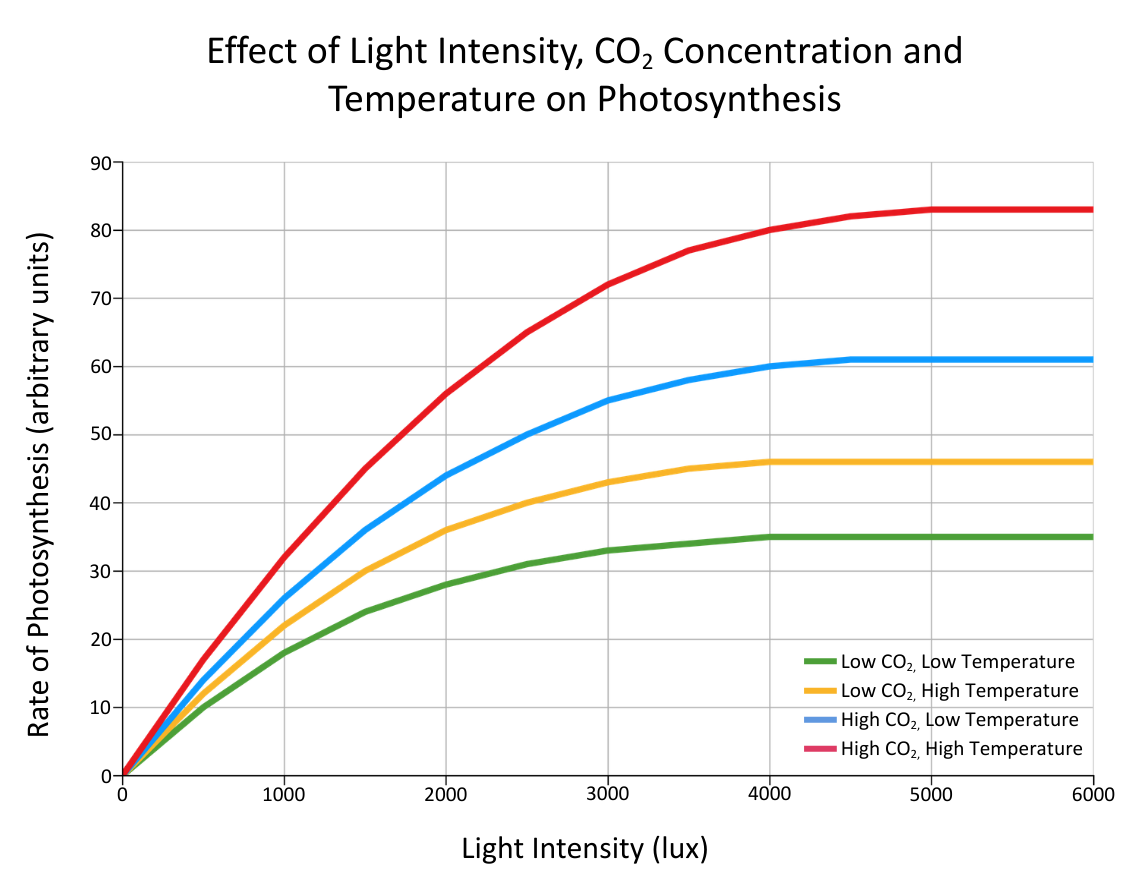
Carbon dioxide is the substrate for carbon fixation in the Calvin cycle, and at low carbon dioxide concentrations, the rate at which RuBP can accept carbon dioxide is reduced.
The graph below shows how carbon dioxide concentration affects the rate of photosynthesis at different light intensities and temperatures:
Temperature
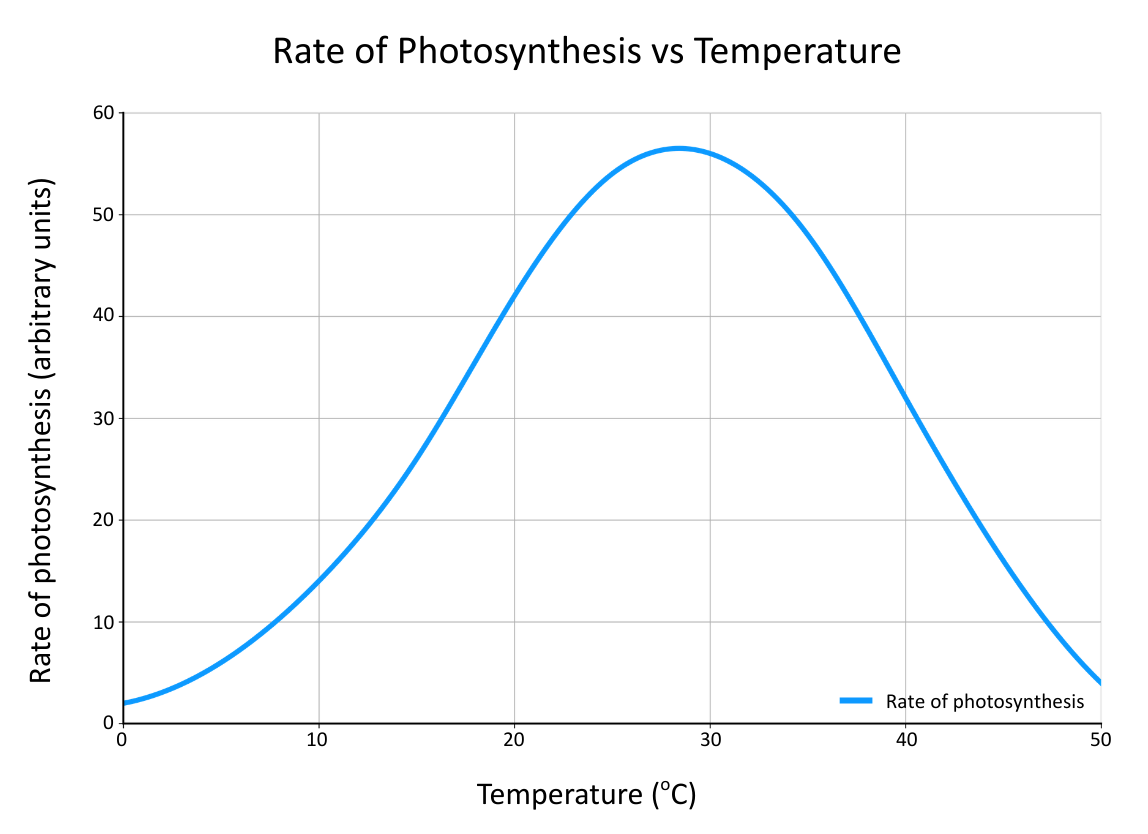
Temperature affects the rate of photosynthesis because the Calvin cycle relies on enzyme-controlled reactions.
The graph below shows how temperature affects the rate of photosynthesis:
The table below outlines the effect of each environmental factor on the products of the Calvin cycle:
| Factor | GP | TP | RuBP | Reason |
|---|---|---|---|---|
| Low light | ↑ | ↓ | ↓ | Less ATP & reduced NADP available to reduce GP into TP |
| Low CO₂ | ↓ | ↓ | ↑ | RuBP cannot fix CO₂, so RuBP accumulates |
| Low temperature | ↓ | ↓ | ↓ | All enzyme reactions slow down |