Free Charles Darwin and Alfred Russel Wallace revision notes for OCR A Level Biology – covering specification point 4.2.2(e).
Charles Darwin’s Evidence for Natural Selection
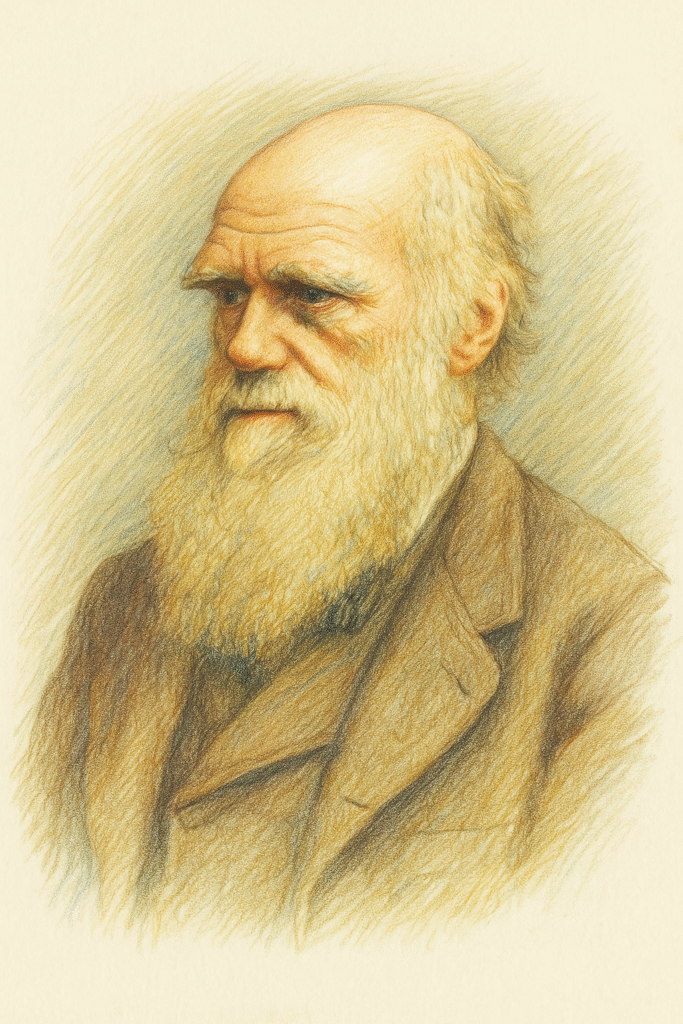
Charles Darwin travelled around the world on HMS Beagle between 1831 and 1836.
The observations Darwin made during this time gave him the idea that all species were descended from other, earlier species, and that all species may be related.
This became the basis of Darwin’s theory of evolution by natural selection, a scientifically supported explanation for how species change over time.
The table below outlines Darwin’s key observations and the subsequent hypotheses and theories:
| Observation | Hypothesis | Theory |
|---|---|---|
| Fossils of extinct animals resembled living species in the same region | Extinct and extant species may be related | Species change over time and may evolve from earlier forms |
| Variation existed between individuals of the same species | Some individuals are better adapted to survive and reproduce | Variation means some individuals will pass on their traits more successfully than others: natural selection |
| Offspring resembled their parents more than others, yet still varied | Advantageous traits are often inherited and passed to offspring | Traits that increase survival and reproduction become more common over time |
| Different species lived in similar habitats but shared similar features | The environment determines which traits are useful | Different species can evolve similar traits under the same selection pressures |
| Different finches and tortoises on each Galápagos island | Populations adapt to local environments over time | Isolation and natural selection can lead to new species evolving |
Alfred Russel Wallace’s Evidence for Natural Selection
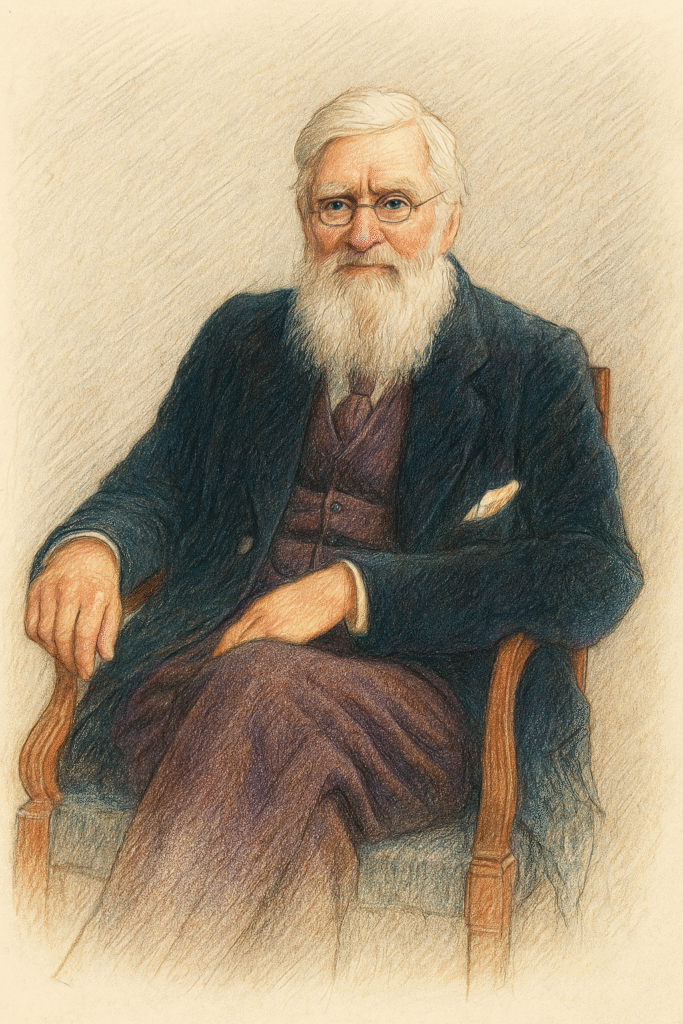
Alfred Russel Wallace was a British naturalist, collector, and explorer who independently developed a theory of evolution by natural selection at the same time as Charles Darwin.
The table below outlines Russel Wallace’s key observations and the subsequent hypotheses and theories:
| Observation | Hypothesis | Theory |
|---|---|---|
| Species on either side of a geographical divide were completely different. | Long-term geographical separation prevents populations from mixing. | Isolation leads to gradual divergence and the formation of distinct species. |
| Animal species had traits suited to where they lived. | Species evolve over time in response to selection pressures caused by their environment. | Natural selection causes populations to become adapted to their environment. |
| Variation existed between individuals of the same species. | Some individuals are better adapted to survive and reproduce. | Variation means some individuals will pass on their traits more successfully than others. |
| Tropical islands had high numbers of unique species. | Isolated, or diverse habitats accelerate the development of new species. | Evolution occurs rapidly where populations are both separated and ecologically varied, driving speciation. |