Free Blood Vessels revision notes for OCR A Level Biology – covering specification point 3.1.2(c).
Blood Vessels
The mammalian circulatory system uses a network of blood vessels to transport blood throughout the body.
The structure and function of these vessels vary depending on their role and position in the circulatory system.
The table below outlines the structure and function of these blood vessels:
| Vessel Type | Function | Structure |
|---|---|---|
| Arteries | Carries blood away from the heart at high pressure. |
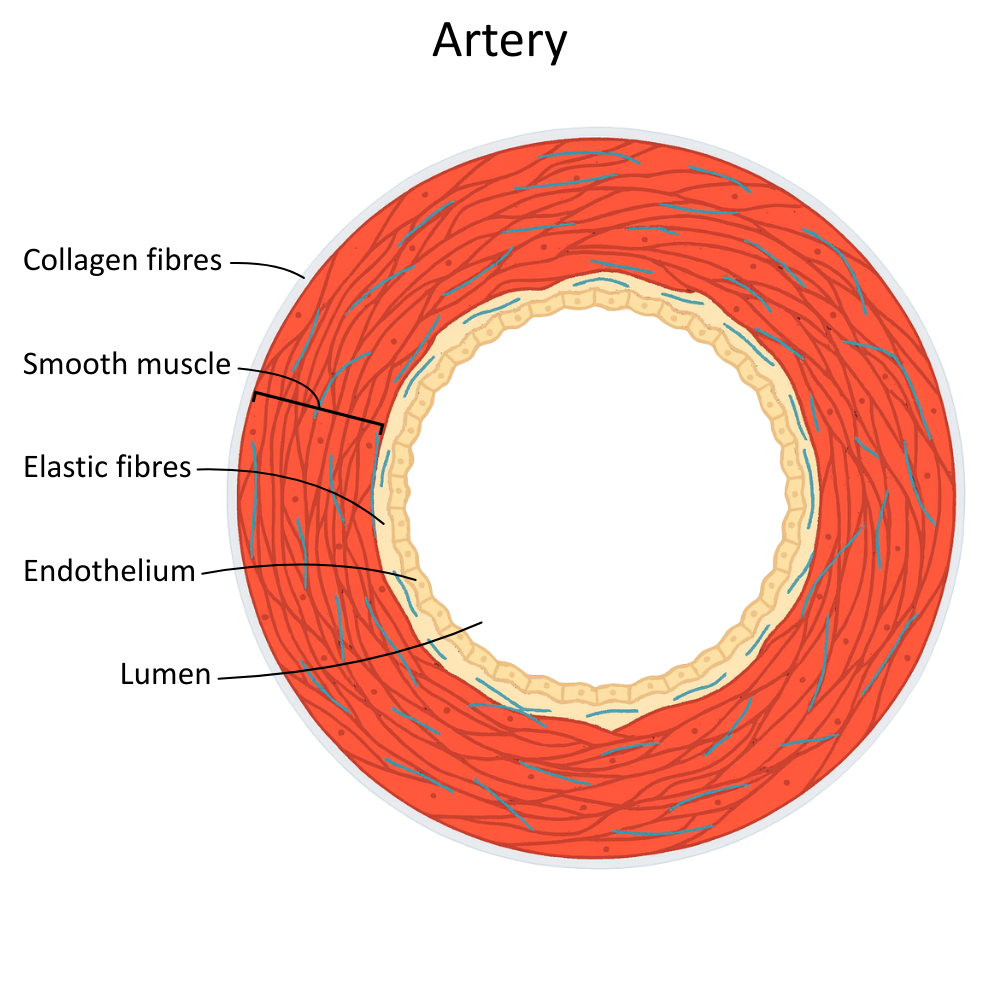
– Thick muscular walls with elastic tissue to recoil and maintain blood flow. – Narrow lumen. – No valves |
| Arterioles |
– Carries blood into the capillaries. – Controls blood flow into the capillaries by vasoconstriction or vasodilation. |
– Smaller than arteries. – More smooth muscle, less elastic tissue. – Narrow lumen. |
| Capillaries |
– Exchanges substances between blood and tissues. – Short diffusion distance and large surface area. |
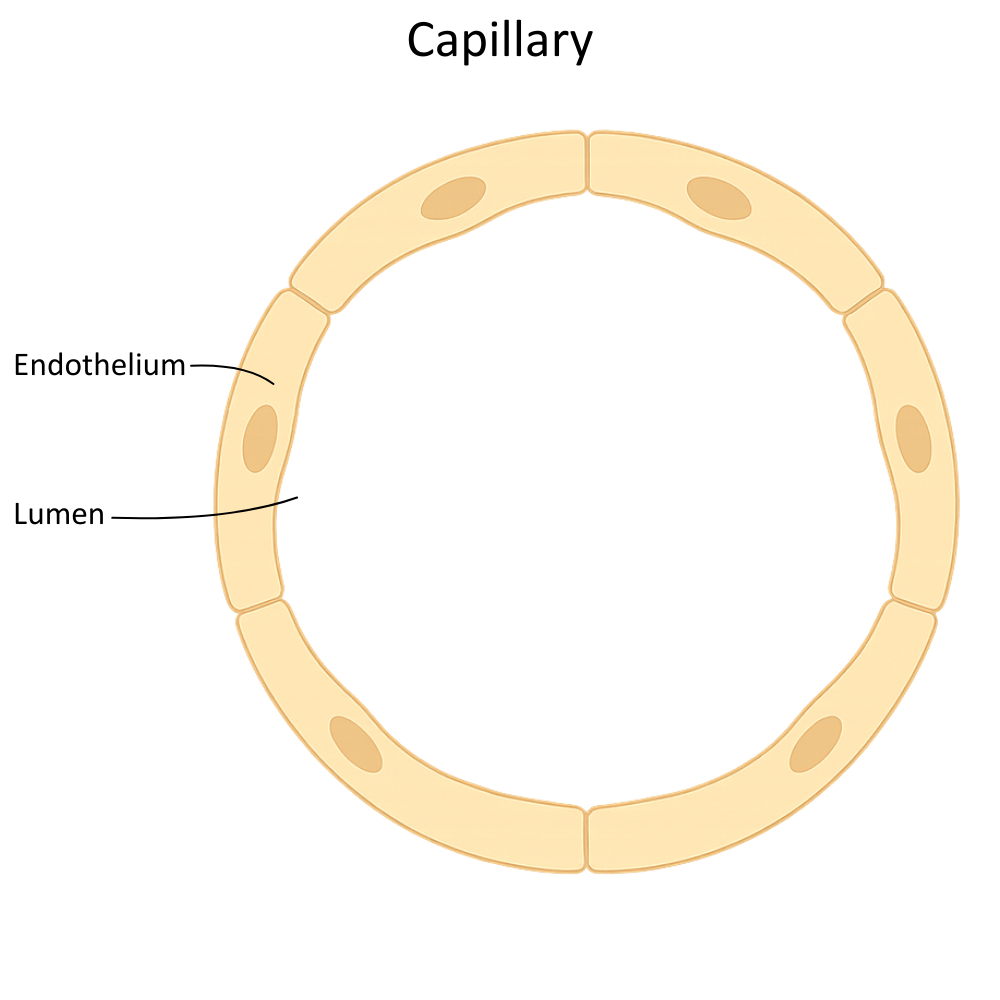
– One-cell-thick walls (endothelium only). – Very narrow lumen (one red blood cell wide, to reduce diffusion distance). |
| Venules | Carries blood from the capillaries and returns it to the veins. |
– Small vessels with thin walls. – Some smooth muscle, little elastic tissue. – Wider lumen than capillaries. |
| Veins | Returns blood to the heart. |
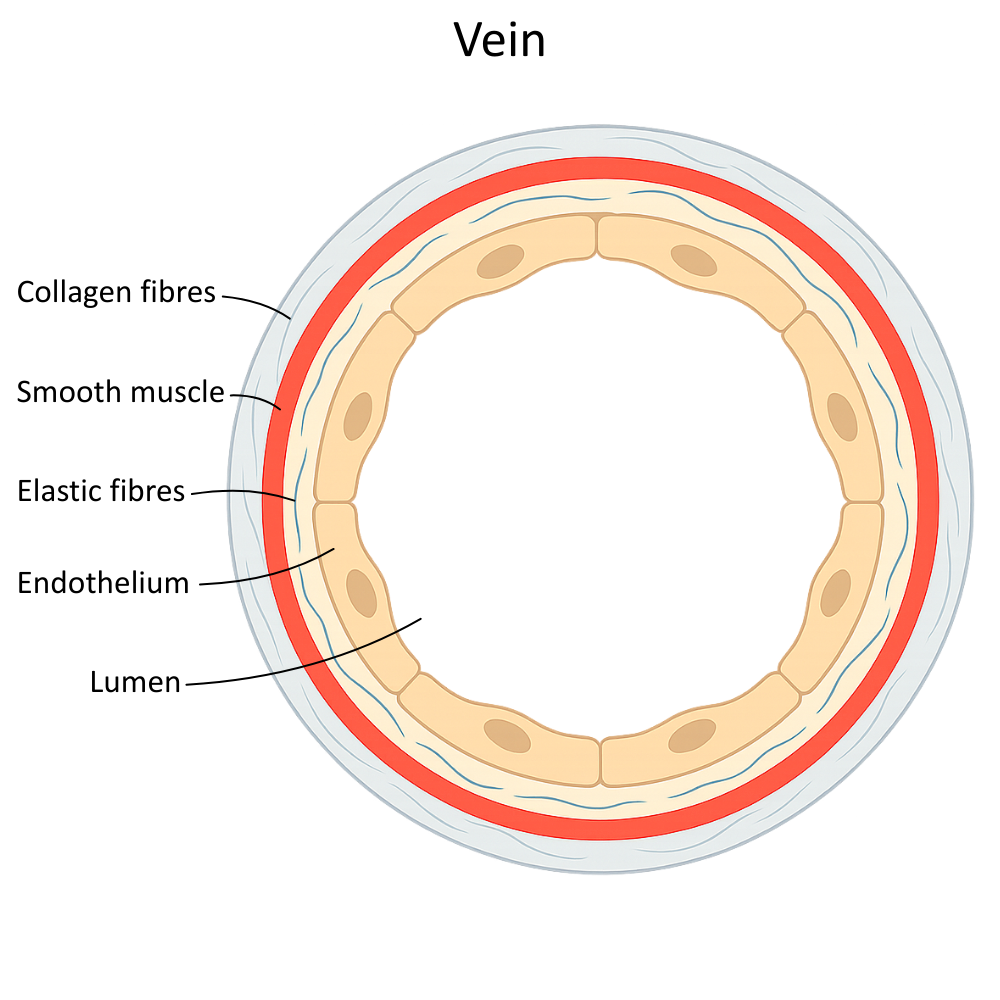
– Thin walls, wide lumen. – Little smooth muscle and elastic tissue. – Skeletal muscles help blood flow. – Valves are present to prevent backflow. |
The diagram below shows the different structural compositions of blood vessel types: