
Free Interactions Between Populations OCR A Level Biology revision notes – covering specification point 6.3.2(b).
Organisms within a habitat interact with one another as they acquire resources.
Interactions between organisms are either interspecific or intraspecific:
- Interspecific interactions occur between populations of different species as organisms compete for resources (e.g. food, light, space) or engage in predator-prey relationships*.
- Intraspecific interactions occur within the population of a single species as organisms compete for resources (e.g. food, mates, territory).
*Predator-prey relationships are one type of feeding interaction; other types include herbivory, parasitism, and mutualism. Predator-Prey relationships are the specific example given in the OCR A Level Biology specification.
Competition
Competition occurs when organisms require the same resource that is limited.
Predation
Predation is when one organism (the predator) hunts, kills and eats another organism of a different species (the prey).
Predator-prey relationships describe the effect that this interaction has on the populations of both the predator and prey species.
Each population in a predator-prey relationship acts as a limiting factor on the other:
- The prey population is limited by predation, because predators raise the mortality rate of the prey.
- The predator population is limited by prey availability, because a shortage of prey raises the mortality rate of the predator.
The graph below shows the cyclical changes in population size observed in a predator-prey cycle:
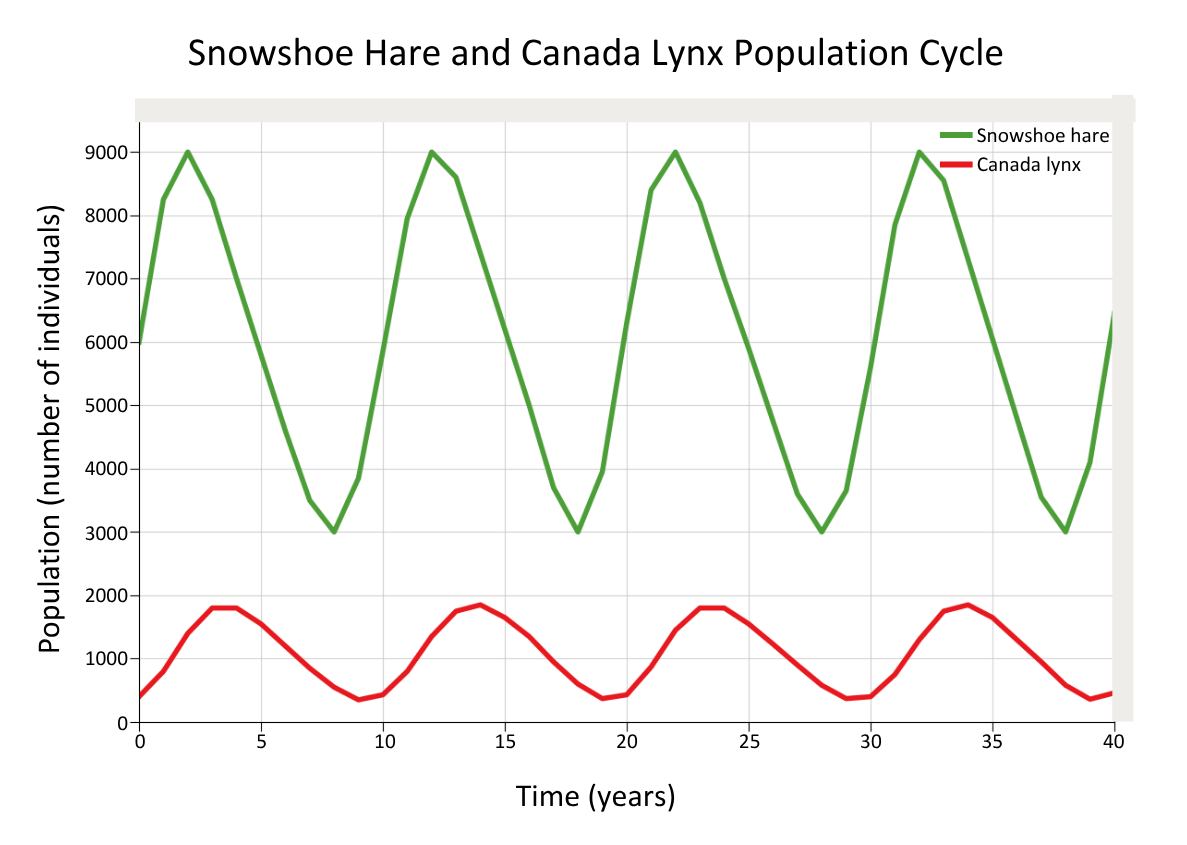
The graph above demonstrates the time delay between a change in one population and the change it causes in the other.
It is useful to know that scientists have documented clear predator-prey cycles in the Canadian lynx and the snowshoe hare due to long-term data sets recorded over a century by fur traders recording the number of pelts from wild animals that were traded.