
Free Recycling in Ecosystems OCR A Level Biology revision notes – covering specification point 6.3.1(c).
Recycling within Ecosystems
The chemical elements that make up living things are recycled continuously between the biotic and abiotic components of an ecosystem.
Two elements recycled in this way are carbon and nitrogen, each through its own cycle:
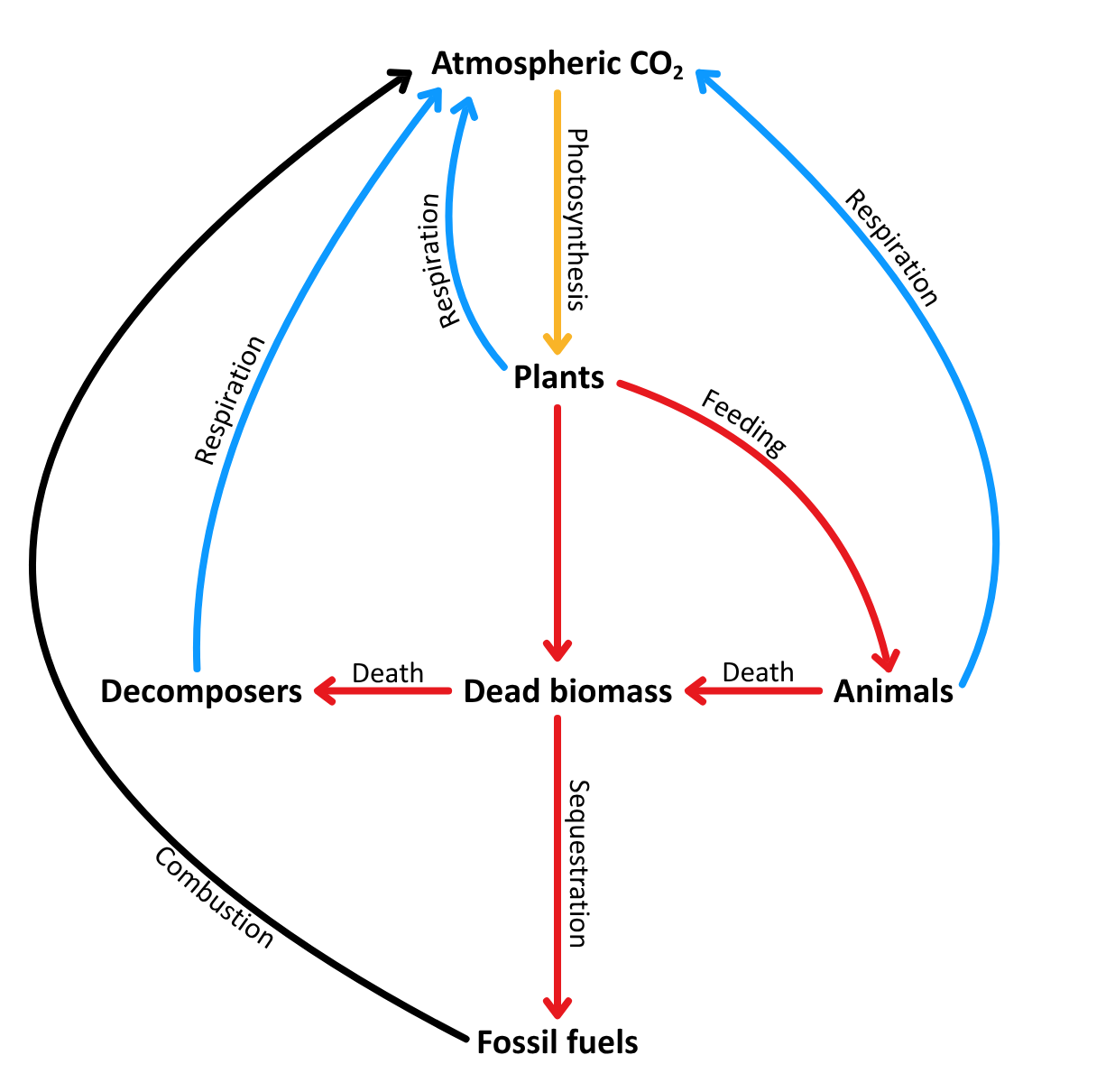
- The carbon cycle: Carbon is cycled between the atmosphere, where it exists as carbon dioxide, and living things, driven mainly by photosynthesis and respiration.
- The nitrogen cycle: Nitrogen is cycled between the atmosphere, where it exists as nitrogen gas, soil, and living things, mainly through the action of bacteria.
The Carbon Cycle
The carbon cycle describes how carbon atoms move through the different components of an ecosystem.
Carbon is transferred between the abiotic and biotic components of an ecosystem through several different processes, including:
- Combustion: Burning biomass and fossil fuels releases CO₂ back into the atmosphere.
- Decomposition: Decomposers respire whilst breaking down the biomass in dead organisms and waste, releasing CO₂ back into the atmosphere.
- Feeding: Consumers eat other organisms, moving the carbon stored within biomass along food chains.
- Sequestration: The removal of carbon from circulation within the carbon cycle for long periods of time in carbon sinks (e.g. dissolved deep in the ocean, formation of carbonate rocks).
- Photosynthesis: Producers take in CO₂ from the atmosphere and fix it into organic molecules to form biomass.
- Respiration: Organisms break down organic molecules during respiration and release CO₂ back into the atmosphere.
The diagram below shows the processes that move carbon around the ecosystem in the carbon cycle:
The Nitrogen Cycle
The nitrogen cycle describes how nitrogen atoms move through the different components of an ecosystem.
The diagram below shows the processes that move nitrogen around the ecosystem in the nitrogen cycle:
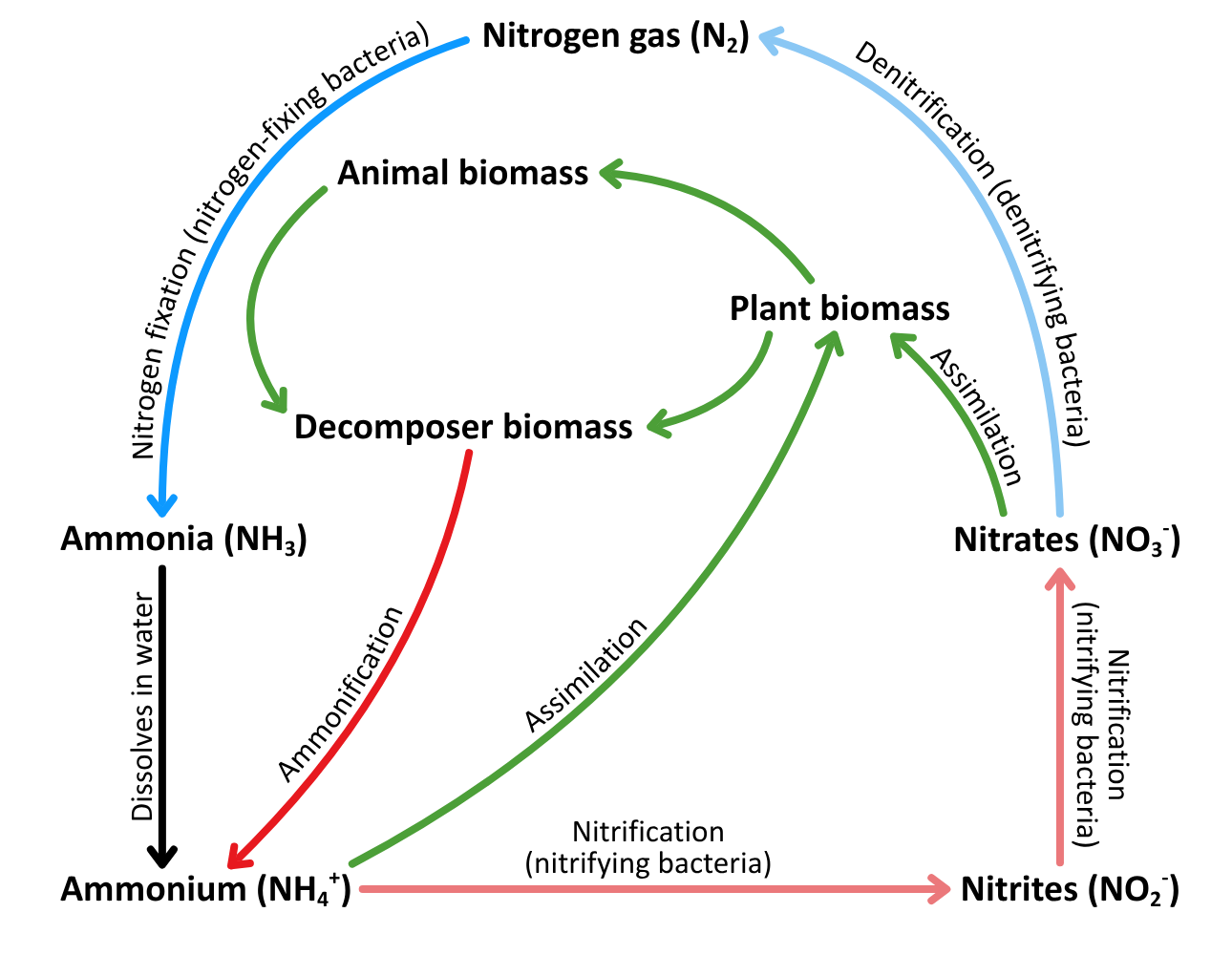
It is useful to know that lightning causes N2 to react with oxygen to produce NO₃⁻, which can be absorbed by plants from the soil.
Roles of Organisms in the Nitrogen Cycle
Organisms have many different roles in cycling nitrogen through the nitrogen cycle.
Nitrosomonas, Nitrobacter, Azotobacter and Rhizobium are the named examples of microorganisms involved in the nitrogen cycle in the OCR A Level Biology specification. You are expected to recall them and know their roles in the nitrogen cycle.
The table below outlines the roles that these organisms have in the nitrogen cycle:
| Organism | Role in the nitrogen cycle |
|---|---|
| Nitrogen-fixing bacteria (e.g. Rhizobium, Azotobacter) | Convert atmospheric nitrogen gas (N2) into ammonia (NH3) or ammonium ions (NH4+), making nitrogen available to other organisms. |
| Consumers (e.g. caterpillars, foxes) | Obtain nitrogen by feeding on other organisms, and use it to build proteins and nucleic acids. |
| Detritivores (e.g. earthworms, woodlice)* | Feed on dead organisms and waste, physically breaking them into smaller pieces and increasing the surface area available to saprotrophs. |
| Saprotrophs (e.g. fungi, bacteria)* | Break down the organic nitrogen in dead organisms and waste during ammonification, releasing ammonia (NH3), which may turn into ammonium (NH4+). |
| Nitrifying bacteria (e.g. Nitrosomonas, Nitrobacter) | Oxidise ammonium (NH4+) to nitrite (NO2−), then nitrite to nitrate (NO3−). |
*Decomposers are organisms which break down dead biomass or waste, allowing the nutrients to return to the environment. Decomposers either break down biomass and waste physically, as detritivores, or chemically, as saprotrophs.